Strong After Gray Divorce: Protecting Your Bone Health, Muscle, and Independence
Aug 14, 2026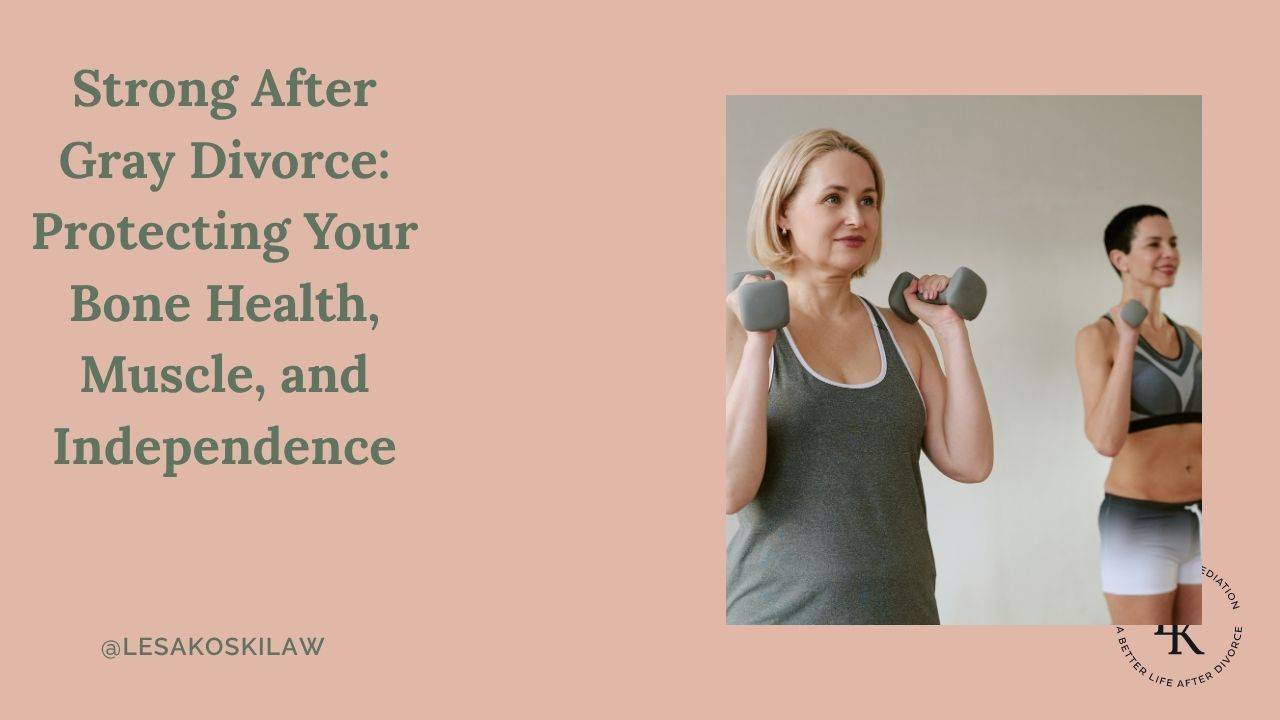
When we talk about gray divorce after 50, we tend to focus on the house, retirement accounts, Social Security, spousal maintenance, and where everyone will live. We talk about emotional pain, adult children, and the fear of beginning again.
All of those conversations matter. But there is another one we need to have: How will you care for the body that must carry you through this transition and into the life you are rebuilding?
Staying strong after 50 is not simply about a positive attitude or fitting into a certain size. It is about protecting your muscle, balance, mobility, metabolism, bones, and independence.
Why physical strength matters during gray divorce
A divorce later in life can change the future you thought you had planned. Perhaps you expected to retire together, travel together, remain in the family home, or help care for grandchildren as a couple.
Now you may be wondering whether you can afford the home, maintain it alone, or manage if you become ill.
These concerns are understandable. Yet your age does not disqualify you from creating a strong, meaningful next chapter. Physical strength can support your ability to:
- Carry groceries and suitcases
- Get up safely from the floor
- Maintain your house, yard, or garden
- Hold and play with grandchildren
- Protect your balance and reduce the consequences of a fall
- Remain mobile and independent
My message has always been: Midlife is not your crisis—it is your comeback. Caring for your body can be a meaningful part of that comeback.
Bone loss can be silent
Women often know their blood pressure, cholesterol, or weight but have never asked about bone density. Osteopenia and osteoporosis may develop without obvious symptoms, so a person can feel healthy and active while bone changes are occurring.
This became deeply personal for me. My beloved Grandma Rose experienced a fracture, and the complications that followed ultimately contributed to her death. Years later, I learned that I had osteopenia. After breast cancer treatment, a follow-up scan showed that I was moving closer to osteoporosis.
I was surprised because I exercised and lifted weights. I thought I was doing so many of the right things. But bone loss can be quiet, and menopause and certain health conditions or treatments may affect an individual woman’s risk.
If you do not know where you stand, consider asking your healthcare provider:
“Based on my age and personal risk factors, should I have a bone-density test?”
A DEXA scan is commonly used to measure bone density. Your provider can explain whether screening is appropriate, what your results mean, and how often testing should be repeated.
My personal experience with OsteoStrong
My mother also had bone-density concerns, so we began exploring ways to support our health together. One of the things we tried was OsteoStrong.
The sessions were brief, coached, and became something we could do together. I appreciated not only the physical experience but also the community—the women we met, the conversations we shared, and the encouragement of people who knew our names.
Over time, both my mother’s and my follow-up measurements improved. That is our personal experience and not a guarantee of another person’s results. OsteoStrong was not the only part of our plans, and it is not medical treatment. We also paid attention to screening, resistance exercise, weight-bearing movement, nutrition, and professional guidance.
If you are curious, you can explore OsteoStrong Minnesota through my affiliate link. Talk with an appropriate healthcare professional before beginning any new wellness or exercise program.
Divorce stress can disrupt basic self-care
During divorce, your brain may be consumed with survival: the next legal bill, email, mediation, financial decision, or conversation with your spouse. You may sleep poorly, skip meals, drink more than usual, stop exercising because you are exhausted, or overexercise because being busy helps you avoid your feelings.
This is not a reason to judge yourself. You do not need another list of things you are doing wrong.
Instead, ask a gentler question:
“What is one way I can support my body today?”
The answer might be a 10-minute walk, a nourishing meal, an earlier bedtime, an appointment you need to schedule, or asking a friend to join you for an exercise class.
When you are in survival mode, small and consistent is better than dramatic and unsustainable.
GLP-1 medications, weight loss, muscle, and bone health
GLP-1 medications—including Ozempic, Wegovy, and Zepbound—have become common tools for weight management and certain health conditions. For an appropriate patient, they may provide meaningful benefits under professional care.
At the same time, significant weight loss can involve more than body-fat loss. Depending on the person and circumstances, muscle, nutrition, and bone health may need additional attention. Women in midlife may already have individual risk factors related to menopause, low body weight, previous fractures, certain medications, or cancer treatment.
If you use a GLP-1 medication, do not make changes because of a podcast, blog, or social-media post. Instead, speak with your prescriber or another qualified healthcare professional about questions such as:
- Is my rate of weight loss appropriate?
- Am I eating enough protein and getting adequate overall nutrition?
- What resistance or weight-bearing exercise is safe for me?
- Do my personal risk factors suggest that bone-density screening is appropriate?
- How can I protect muscle and strength while losing weight?
The goal is not fear. It is informed, individualized care.
Five ways to support your strength after divorce
1. Learn your starting point
Ask your healthcare provider whether bone-density screening makes sense for you and what your results mean. Information gives you choices.
2. Protect your muscle
Muscle supports bones, balance, metabolism, mobility, and independence. Safe resistance training does not require becoming a bodybuilder. You can begin slowly and seek professional guidance if you have osteoporosis, joint pain, balance concerns, or a recent surgery.
3. Use your body against gravity
Depending on your health and abilities, weight-bearing movement might include walking, stair climbing, dancing, tennis, or strength training. Yoga, tai chi, and appropriate balance exercises can also support stability. Ask a professional what is safe for your body.
4. Nourish yourself
Stress can make cooking and eating feel exhausting. Focus on nourishment rather than simply eating less. Your individual needs for protein, calcium, vitamin D, and other nutrients depend on your health, diet, medications, and lab results, so seek individualized advice.
5. Find a healthy community
Divorce may change friendships, routines, and family relationships. A walking group, gym, class, church, supportive friend, wellness community, or divorce-support community gives you somewhere to go and someone who notices when you walk through the door.
Choose one strong step
Strength is not a number on the scale, the size of your jeans, or pretending that divorce does not hurt.
Strength is telling the truth about where you are. It is asking for help, learning about your finances, setting a healthy boundary, caring for your body, and taking the next right step.
You may have spent decades caring for your spouse, children, home, or career while placing your needs last. Perhaps this season is an invitation to care for yourself with the same devotion you have offered everyone else.
You do not have to transform your life this week. Take the walk. Eat the nourishing meal. Lift the safe weight. Call the friend. Make the appointment. Talk to God about what comes next.
Your future is not only about getting through gray divorce after 50. It is about creating a healthy, strong, confident life on the other side—and being able to enjoy your comeback.
Additional Divorce Resources
- Learn about Lesa Koski’s divorce coaching, mediation, and community
- Explore OsteoStrong Minnesota (affiliate link)
- Learn about Soberlink for divorce and family-law matters (affiliate link)
Affiliate disclosure: I may receive compensation if you use an affiliate link, at no additional cost to you. This post is for general educational purposes and shares personal experience; it is not medical advice. Consult qualified healthcare professionals about your health, medication, nutrition, exercise, and screening needs.